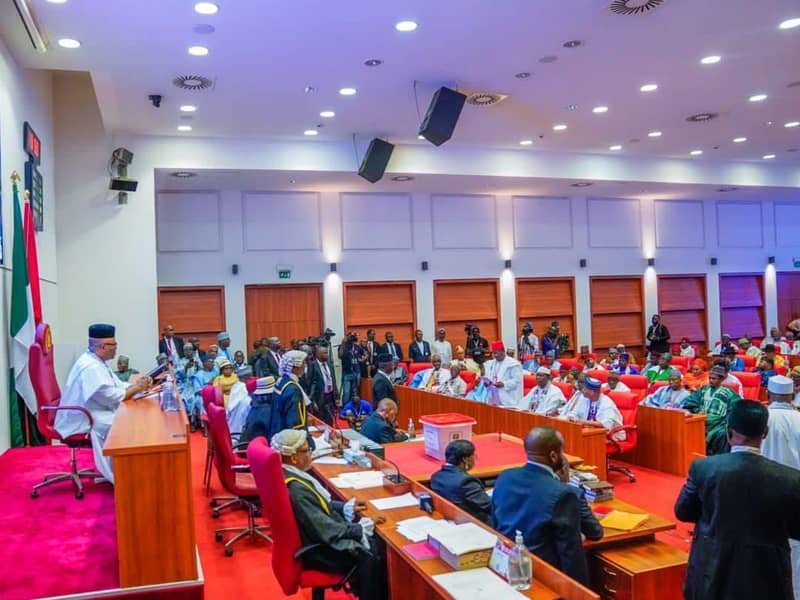
The Senate of the Federal Republic of Nigeria has moved to strengthen the nation’s emergency healthcare system, calling for the mandatory stocking of life-saving antidotes, including snake antivenoms, in all public and private hospitals nationwide.

The resolution, adopted on Tuesday, follows growing concern over rising cases of medical emergencies — particularly snakebites, poisoning, and scorpion stings — and was catalysed by the widely reported death of Miss Ifunanya Nwangene, a young Abuja resident who died after being bitten by a snake and unable to receive timely antivenom treatment.
In debate, Senator Sunday Karimi (APC, Kogi West) described the case as “needless,” saying that no Nigerian should die from a condition for which a remedy exists. “That shouldn’t happen in our country because we are supposed to have antidotes,” he told colleagues on the Senate floor.
Senators also heard from Senator Idiat Oluranti Adebule (APC, Lagos West), who sponsored the motion, urging lawmakers to consider snakebite and other emergencies as part of broader weaknesses in the country’s emergency care. She warned that delays in administering specific antidotes during the critical “golden hour” often result in preventable deaths or lasting complications.
“The tragic death of Miss Ifunanya Nwangene exposes the grave consequences of inadequate emergency preparedness in both public and private hospitals,” Adebule said. “No Nigerian should lose their life simply because a hospital lacks basic, life-saving antidotes.”
In adopting the motion, the Senate issued a set of comprehensive resolutions to improve emergency medical response:
Directing the Federal Ministry of Health and Social Welfare to develop and enforce national guidelines on minimum antidote stock levels in designated hospitals.
Urging collaboration with the National Agency for Food and Drug Administration and Control (NAFDAC) to ensure the procurement, quality assurance, proper storage, and nationwide availability of safe and effective antivenoms.
Calling on state governments and the FCT Administration to audit hospitals within their jurisdictions to confirm compliance with approved emergency preparedness standards.
Mandating that the stocking of essential antidotes be made a condition for licensing and accreditation of private hospitals.
Urging nationwide public sensitisation campaigns by the Federal Ministry of Information and the National Orientation Agency to increase awareness about the importance of prompt treatment after envenomation and poisoning incidents.
Presiding over the session, Senate President Godswill Akpabio acknowledged the loss of Nwangene as a significant blow to the nation and expressed lawmakers’ resolve to protect lives through strengthened health policies. “The welfare of Nigerians must remain paramount. No life should be lost because of avoidable lapses in our healthcare system,” he said.
Lawmakers also recommended coordinated emergency referral systems linking public and private hospitals to improve access to critical care, especially in high-risk regions.
The Senate’s action comes amid broader calls for urgent reforms in Nigeria’s healthcare infrastructure, particularly in emergency preparedness and response to envenomation — a health issue the World Health Organization classifies as a neglected tropical disease.