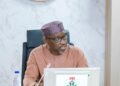
The Attorney General and Commissioner for Justice of Lagos State, Mr. Lawal Pedro, SAN, has refuted accusations from the Economic and Financial Crimes Commission (EFCC) that he was responsible for delays during the trial of American businessman, Marco Ramirez.

Ramirez was convicted last week for defrauding Nigerians in a $1.2 million visa scam under the U.S. Employment-Based Fifth Preference (EB-5) Investor Program.
Ramirez, along with his companies, USA NOW LLC, Eagle Ford Group LP, and USA Now Energy Capital Group LP, was sentenced to 68 years in prison by a Lagos High Court.
The conviction followed his arraignment in June 2017 and subsequent re-arraignment in 2019 on 12 counts of conspiracy and obtaining money under false pretenses.
Pedro, who represented Ramirez in court until his appointment as Lagos Attorney General in 2023, was accused by the EFCC of causing multiple adjournments in the case.
The anti-graft agency claimed the defense, under Pedro, failed to submit its final written addresses promptly, contributing to the delays.
However, in response to these allegations, Pedro strongly denied any misconduct.
He emphasized that he had diligently concluded the trial before stepping down as Ramirez’s counsel following his government appointment.
He also criticized the EFCC for presenting a one-sided narrative, accusing the commission of attempting to tarnish his reputation.
Pedro clarified that after his appointment, another lawyer, David Odde of Seagate Partners, took over Ramirez’s defense and was present during the judgment.
He questioned why the EFCC’s report failed to mention Odde’s involvement in the case while focusing on his own.
Pedro further argued that crucial aspects of the defense, such as documents proving that Ramirez had approval from the U.S. Home Office to process visas at the time the funds were collected, were omitted from the EFCC’s statement, leading to a misleading portrayal of the trial.
The Lagos Attorney General concluded that the report appeared to be an effort to cast aspersions on him and mislead the public regarding the trial’s proceedings.