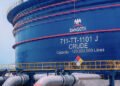
Amnesty International has praised the Nigerian Government’s decision to block Shell Petroleum Development Company’s planned $1.3 billion sale of its onshore oil assets to Renaissance Group, a consortium of local and international energy companies.

The Federal Government, through the Nigerian Upstream Petroleum Regulatory Commission (NUPRC), recently denied the sale, citing concerns about the buyer’s qualifications to manage the assets.
At a press conference in Port Harcourt, Amnesty International’s Head of Business and Human Rights, Mark Dummett, urged that any multinational oil company seeking to exit the Niger Delta should address longstanding human rights abuses linked to oil spills that have polluted the region.
“The federal government must insist on the protection of human rights, by holding Shell accountable for oil spills and committing to fund cleanup efforts in the Niger Delta,” Dummett emphasized.
Shell first announced its intent to divest its Nigerian onshore subsidiary, Shell Petroleum Development Company of Nigeria Limited (SPDC), to Renaissance on January 16, 2024.
However, completion of the $1.3 billion deal required federal approval, as well as the fulfillment of other conditions.
In April, the NUPRC introduced a divestment framework, consisting of seven key pillars, to guide ministerial consent for sales like SPDC’s. While other multinationals have successfully divested, Shell’s application was recently denied due to concerns over the buyer’s capability.
Dummett further stressed that the government must prevent Shell from “evading responsibility” for environmental damages in the Niger Delta, including polluted drinking water and degraded agricultural lands.
He added that while Shell may continue to push for the sale, it is essential for the Nigerian Government to ensure remediation efforts are prioritized before any divestment.