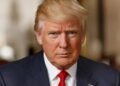
U.S. President-elect Donald Trump announced plans on Monday to impose significant tariffs on goods from Mexico, Canada, and China, citing concerns over illegal drug trade and immigration.

In a series of posts on his Truth Social account, Trump vowed to enact sweeping trade measures targeting some of the country’s largest trading partners as part of his economic agenda.
“On January 20th, as one of my many first Executive Orders, I will sign all necessary documents to charge Mexico and Canada a 25% tariff on ALL products coming into the United States, and its ridiculous Open Borders,” Trump wrote.
Moments later, he declared his intention to impose a 10% tariff on all goods from China, “above any additional Tariffs,” citing the country’s failure to curb fentanyl smuggling.
Tariffs have been a cornerstone of Trump’s economic policy, with the Republican president-elect promising on the campaign trail to leverage trade duties to secure better agreements and revive American manufacturing jobs.
Critics, including many economists, have cautioned that such tariffs could slow economic growth and increase inflation, as importers often pass the additional costs to consumers.
Nonetheless, Trump’s advisors have defended the measures as essential tools for negotiation, positioning the U.S. to demand more favorable trade terms and reduce dependence on foreign manufacturing.
Trump’s proposed tariffs mark a continuation of his hardline trade policies, which characterized his first term and remain central to his vision for reshaping U.S. economic relations with key global partners.
AFP