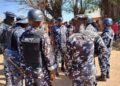


The Chief of Army Staff (COAS), Lieutenant General Taoreed Lagbaja, highlighted inadequate funding, manpower shortages, and the absence of a strong industrial base as key challenges affecting the Nigerian Army’s ability to effectively tackle the nation’s security issues.

Speaking at the 2024 Distinguished Personality Lecture in Ilorin, Kwara State, organized by the Centre for Peace and Strategic Studies, University of Ilorin, in collaboration with the Martin Luther Agwai International Leadership and Peacekeeping Centre, Jaji, Lagbaja stressed that limited resources are directly impacting the Army’s performance.
“The inadequacy in funding is affecting the level of equipment holding of the Armed Forces of Nigeria (AFN), which has a direct bearing on performance,” Lagbaja said. He noted that in 2023, the entire Armed Forces had a budget of $2.8 billion, with an additional $1 billion in supplementary funds, but not all provisions were fully released.
Represented by the Chief of Training (Army), Major General Sanni Gambo Mohammed, Lagbaja emphasized the need for more personnel to secure Nigeria’s population of over 200 million. “It is unrealistic for security agencies totalling around two million, including an Army of just over 100,000 active personnel, without a reserve force, to secure the entire population,” he said.
Lagbaja also pointed out that the lack of a strong industrial base forces the military to import over 90 percent of its hardware, despite some local production.
The Vice Chancellor of the University of Ilorin, Professor Wahab Egbewole, SAN, and the Director of the Centre for Peace and Strategic Studies, Professor Ibrahim Jawondo, also called for continuous peace and security to ensure national development.
Lagbaja concluded by urging all citizens to contribute to the country’s security efforts, stating that a collaborative approach would enhance vigilance, trust, and community engagement for a more resilient nation.