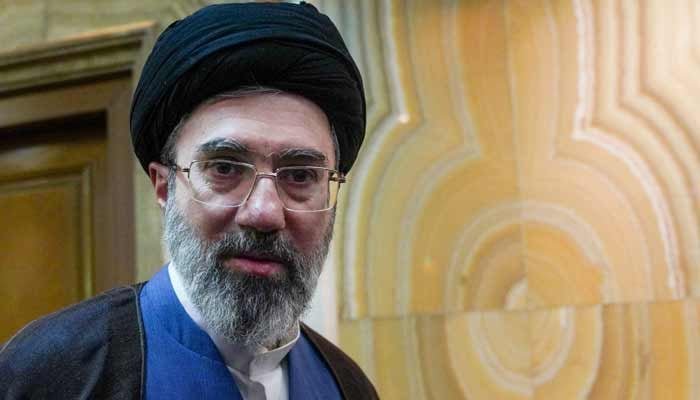
Iran’s Supreme Leader, Mojtaba Khamenei, has vowed to teach the United States “unforgettable lessons” as tensions between the two countries continue to escalate, with Washington confirming its first military fatalities since the renewed hostilities began.

The latest escalation comes a month after a preliminary agreement aimed at ending the conflict collapsed. Tehran has since launched retaliatory strikes across the Gulf following what it described as a week of intensified US attacks targeting civilian infrastructure, including an airport, railway station and several bridges.
Authorities in Kuwait said an Iranian strike hit an oil facility as well as a power and water plant, while Bahrain’s military reported that its air defence systems intercepted a wave of Iranian missiles and drones.
Iran also launched fresh attacks in Jordan, where the US Central Command (CENTCOM) said two American service members were killed on Friday while “defending against Iranian ballistic missile and drone attacks.” The command added that another service member remains missing.
Reacting to the latest developments, Khamenei, who succeeded his father following his death in the opening phase of the US-Israeli military campaign on February 28, accused Washington of abandoning its commitments.
According to a statement carried by Iranian state television, he said:
“Now that the American enemy seeks to incite war and bear its most serious consequences, it should know that the dear Iranian nation and the axis of resistance have unforgettable lessons to offer it.”
He also argued that the renewed attacks demonstrated “the worthlessness of the American president’s signature.”
Major General Mohsen Rezaei, a senior military adviser to the Supreme Leader, warned that Tehran would intensify its military operations if US attacks continued.
“Iran will no longer limit itself to retaliatory, like-for-like responses,” Mohsen said, according to Iranian state media.
Kuwaiti authorities accused Iran of targeting civilian infrastructure, prompting concern among residents over the prospect of a prolonged conflict.
“The demand for water and canned goods has increased since this morning amid fears that services or supply chains will be affected,” Kuwait resident Hassan Rayan, 61, said.
Another resident, Ali Mahmoud, 46, added:
“The streets and beaches were almost empty, even though it is a holiday.”
Iran’s military also said it had targeted a US air base in Bahrain, while Iranian state media reported strikes on fuel storage facilities at Jordan’s Al-Azraq air base. Jordan’s military said it intercepted 10 missiles on Saturday after shooting down at least three the previous day.
Diplomatic efforts to revive negotiations have continued, but prospects for a political settlement remain uncertain as both sides maintain hardline positions.
US President Donald Trump earlier this week threatened further strikes on Iranian infrastructure, although Washington has not officially confirmed any additional military operations.
Iran’s Deputy Foreign Minister, Kazem Gharibabadi, accused the United States of abandoning the memorandum of understanding previously reached between both countries.
“America has violated and stopped all its commitments under that memorandum of understanding, and we have also stopped all our commitments,” he told state television.
Iran’s official news agency, IRNA, reported that US strikes killed three people and injured eight in the southern province of Hormozgan.
In neighbouring Khuzestan Province, local authorities said 95 locations across 12 cities had been targeted over the past 10 days, leaving eight people dead.
Iran also accused the United States of attacking electricity facilities and desalination plants in the village of Bonji, disrupting drinking water supplies to several communities in the country’s south.
The Energy Ministry urged citizens to conserve electricity after the national power grid came under increased strain, while the Health Ministry said at least 50 people had been killed and more than 500 injured since the latest phase of the conflict began.
Commenting on the crisis, Middle East analyst David Khalfa of the Paris-based Jean-Jaurès Foundation said the conflict was increasingly targeting critical infrastructure.
“The paradox is that, while the conflict continues to escalate, neither side has a strategic interest in allowing this dynamic to continue. Yet both perceive any compromise as a form of capitulation.”
AFP