British Prime Minister Keir Starmer has attributed responsibility to foreign ministry officials for the controversial appointment of Peter Mandelson as UK ambassador to the United States, stating that critical information which could have halted the decision was withheld from him.

Addressing Parliament on Monday amid mounting calls from opposition figures to resign, Starmer said he had not been informed that officials were advised against granting Mandelson security clearance. He insisted that the appointment would not have proceeded had he been aware of the recommendation.
The prime minister reiterated his regret over the decision, having dismissed Mandelson in September following revelations about his links to disgraced financier Jeffrey Epstein. The controversy escalated further last week when the government confirmed that Mandelson had failed a security vetting process.
Starmer expressed frustration that officials in the Foreign Office did not disclose that, in January 2025, they had overridden advice and granted Mandelson “developed vetting” clearance — allowing access to top-secret information.
“It beggars belief that throughout the whole timeline of events, officials in the foreign office saw fit to withhold this information from the most senior ministers in our system of government,” Starmer told lawmakers. “That is not how the vast majority of people in this country expect politics, government or accountability to work.”
Initially viewed as a strategic appointment aimed at strengthening ties with incoming US President Donald Trump, Mandelson’s selection has since become a political liability for the prime minister.
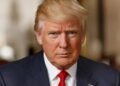
Trump also weighed in on the controversy, describing the appointment as a “really bad pick” in a post on Truth Social, while adding that there was still “plenty of time to recover.”
Starmer acknowledged an error in judgment, stating that he would not have approved the appointment had he known the UK Security Vetting unit advised against granting clearance. He added that measures have now been introduced to prevent officials from overriding such advice in future.
The prime minister’s office sought to clarify earlier statements to Parliament, maintaining that he had acted without full knowledge of the facts. “The prime minister would never knowingly mislead parliament or the public,” his spokesperson said. “He clearly did not have this information when he previously spoke to parliament.”
In response to the revelations, Starmer last week dismissed Olly Robbins, a senior Foreign Office official who had approved a statement indicating Mandelson passed vetting. Robbins has yet to comment publicly, though associates suggest he acted in line with established procedures permitting officials to override vetting advice.
Opposition leaders have criticised the handling of the matter, with Kemi Badenoch accusing Starmer of deflecting responsibility.
“It is how you face up to those mistakes that shows the character of a leader,” Badenoch said in Parliament. “Instead of taking responsibility for the decisions he made, the prime minister has thrown his staff and his officials under the bus.”
The controversy comes at a sensitive time for Starmer, with local elections just weeks away and growing concerns within political circles about the potential impact on Labour’s standing.