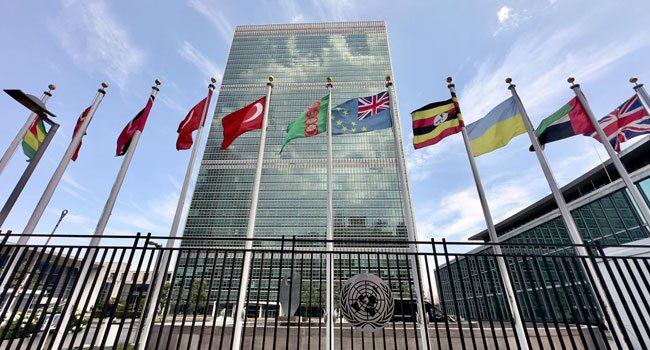
The United Nations General Assembly has adopted a landmark resolution designating the transatlantic African slave trade as “the gravest crime against humanity,” in a move widely seen as a significant step toward historical recognition and justice.

The resolution, backed by a majority of member states, reflects growing global calls to formally acknowledge the scale and enduring impact of the centuries-long slave trade.
Historic Vote at UN
The resolution was adopted following deliberations at the UN, with supporters describing it as a defining moment in confronting one of humanity’s darkest chapters.
According to reports, the measure recognises the trafficking and enslavement of Africans as an atrocity of unparalleled scale and duration, affecting millions over several centuries.
It explicitly “declares the trafficking of enslaved Africans and racialized chattel enslavement of Africans as the gravest crime against humanity.”
Call for Justice and Reparations
Beyond recognition, the resolution urges nations historically involved in the slave trade to engage in restorative justice efforts.
Ghana’s President, John Dramani Mahama, described the move as a moral milestone, stating it serves as “a safeguard against forgetting.”
He emphasised the need for collective global reflection, noting that the initiative allows the world to acknowledge the suffering of millions whose lives and futures were destroyed during the slave trade era.
Similarly, UN Secretary-General Antonio Guterres highlighted the devastating human impact, saying the slave trade “struck at the core of personhood, broke up families, and devastated communities.”
Addressing Lasting Impacts
The resolution also underscores the long-term consequences of slavery, including systemic inequality and racial discrimination that persist today.
It points to “the persistence of racial discrimination and neo-colonialism” as part of the enduring legacy of the slave trade.
Advocates argue that formally naming the atrocity is a crucial step toward addressing historical injustices and fostering meaningful dialogue on reparations and reconciliation.
Debate Over Interpretation
While widely supported, the resolution has faced some criticism from member states concerned that labeling one atrocity as the “gravest” could imply a hierarchy of suffering.
However, proponents have rejected this interpretation, insisting the designation reflects the scale, duration, and systemic nature of the transatlantic slave trade rather than an attempt to diminish other historical tragedies.