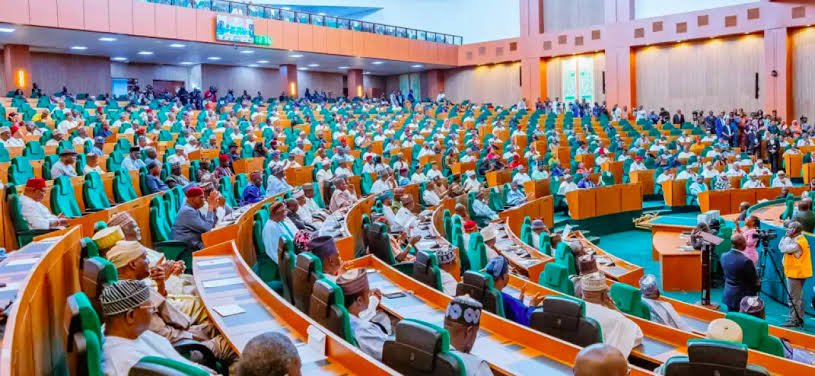
Members of the Nigerian House of Representatives have urged the resignation of top government economic officials, including the Minister of Finance and Coordinating Minister of the Economy, Mr. Wale Edun, as well as the Minister of Budget and Economic Planning, Mr. Atiku Bagudu, and the Chairman of the Nigerian Revenue Service, Mr. Zach Adedeji, over what lawmakers described as “zero implementation” of capital projects in the 2025 federal budget.

The call came amid a tense budget defence session before the House Committee on Appropriations, where lawmakers pressed the ministers over the non-release of funds earmarked for the execution of capital components of the 2025 Appropriation Act.
During the session, the committee chairman, Abubakar Bichi, emphasised the gravity of the situation, saying the hearing was designed “to probe the non-release of funds for the execution of capital projects.” He noted that despite reported revenue growth, “projects were not carried out as captured in the 2025 budget.”
Lawmakers pointed out that while both chambers of the National Assembly had approved a N1.15 trillion request for capital funding, little to no funds have actually flowed to ministries and agencies charged with infrastructure delivery.
In defending the government’s position, Mr. Edun told the House that the federal government had stopped printing money, framing it as an unsustainable practice irrespective of whether funds were needed for debt servicing or contractor payments.
Also speaking, Mr. Bagudu confirmed that approximately 70 percent of the 2025 capital budget had been rolled into the 2026 budget, noting that this formed part of the basis for the current year’s proposal. He further explained that his ministry relies on data from the Office of the Accountant-General and the Ministry of Finance for implementation figures.
As frustration grew inside the chamber, lawmakers vocally expressed their displeasure, at times interrupting the ministers and demanding accountability. In response, some representatives called for the outright resignation of the officials present, accusing them of failing to deliver on critical national priorities.
The incident underscores broader concerns within the National Assembly and among policy analysts about the implementation rate of Nigeria’s capital budgets, which in several ministries has been reported as extremely low or effectively nil.