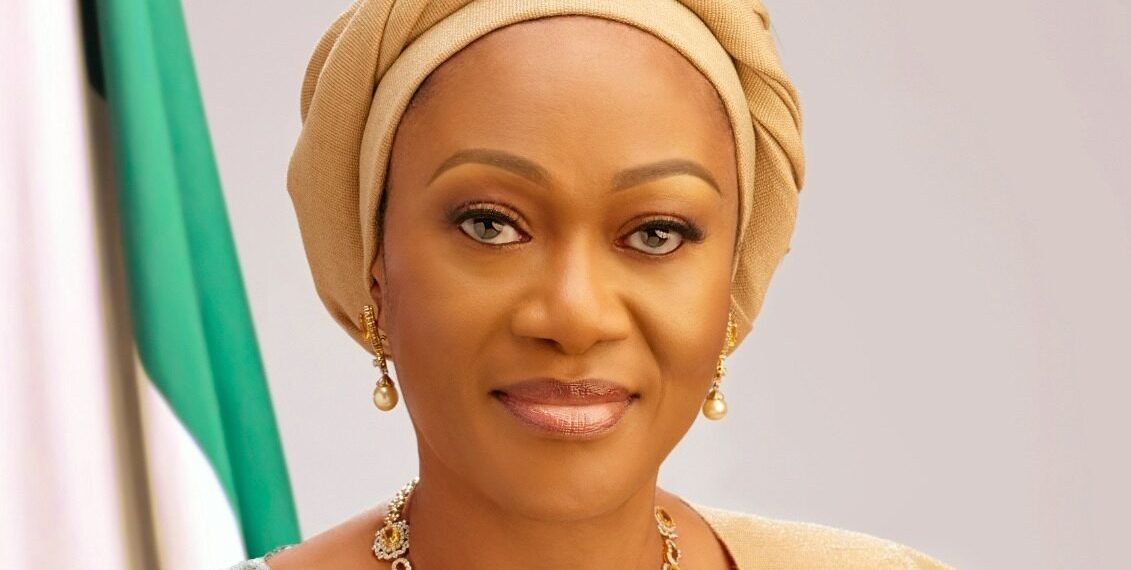
Nigeria’s President Bola Tinubu has turned to soft diplomacy by highlighting the Christian faith of First Lady Oluremi Tinubu in a bid to mend strained ties with the United States, as relations appear to warm under President Donald Trump’s leadership.

The First Lady’s attendance at the 74th Annual U.S. National Prayer Breakfast in Washington, D.C. came after a period of diplomatic tension between Abuja and Washington, and it seems to have yielded diplomatic dividends.
At the event, Trump publicly acknowledged Mrs. Tinubu’s presence, offering unusually positive remarks that many interpreted as a sign of renewed U.S. receptiveness toward Nigeria. “But we’re honoured to be joined today by the First Lady of Nigeria, who also happens to serve as a Christian pastor at the largest church in Nigeria. A very respected woman. First Lady, please, where are you? Thank you very much. It’s a great honour. Thank you very much. Very respected person, too,” the U.S. president said.
Mrs. Tinubu, who is an ordained Christian pastor, has played a prominent role in framing the outreach around faith and shared values, which appears to have resonated in diplomatic circles.
The effort comes amid a backdrop of earlier tensions between the two countries, including concerns over religious persecution and security challenges in Nigeria. Trump’s designation of Nigeria as a “Country of Particular Concern” over alleged attacks on Christians escalated strains late last year, but recent interactions such as the National Prayer Breakfast suggest a shift toward engagement rather than estrangement.
Former Nigerian lawmaker Shehu Sani noted that the First Lady’s recognition by Trump may signal a softening of the U.S. stance, saying that the acknowledgment “has gotten public recognition and respect from President Trump. A hardened stance on the country is now softening, courtesy of adept diplomatic engagement. We hope for the best,” in a reaction posted on social media following the event.
Analysts say that leveraging faith and shared religious values could be a strategic part of Nigeria’s wider diplomatic strategy to reset relations with Washington, especially as security cooperation and high-level dialogue continue.