

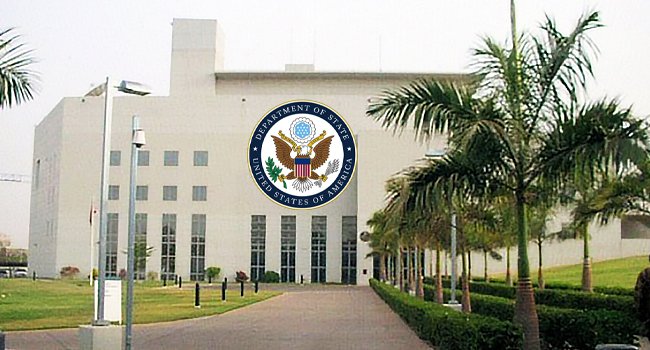
The United States government has authorised the departure of non-essential embassy personnel and their families from Abuja, citing worsening security conditions across Nigeria.

The directive, issued by the U.S. Department of State, forms part of an updated travel advisory warning American citizens about rising risks in the country, including crime, terrorism, kidnapping, and civil unrest.
“On April 8, 2026, the Department of State authorized non-emergency U.S. government employees and U.S. government employee family members to leave U.S. Embassy Abuja due to the deteriorating security situation,” the advisory stated.
The advisory places Nigeria under a “Level 3: Reconsider Travel” classification, while identifying several states as high-risk areas under a stricter “Do Not Travel” category.
Authorities highlighted multiple threats driving the decision, including armed crime, terrorism, and instability in various parts of the country.
“Reconsider travel to Nigeria due to crime, terrorism, unrest, kidnapping, and inconsistent availability of health care services. Some areas have increased risk,” the statement added.
In its breakdown of security concerns, the U.S. government listed several northern states as particularly volatile, citing terrorism, kidnapping, and widespread violence. It also flagged parts of southern Nigeria for high levels of crime, including armed robbery and abductions.
“The security situation in these states is unstable and uncertain due to civil unrest… Security operations to counter these threats may occur without warning,” the advisory noted.
The warning further stressed that violent crimes such as carjacking and kidnapping for ransom remain prevalent nationwide, with foreign nationals often seen as high-value targets.
Beyond security risks, the State Department also pointed to challenges in Nigeria’s healthcare system, describing medical services as limited and inconsistent in many areas.
Despite the heightened alert, the U.S. government advised its citizens to remain vigilant, avoid high-risk areas, and take precautionary measures if travel to Nigeria is unavoidable.
The move underscores growing international concern over security conditions in Nigeria, particularly as incidents of violence, kidnapping, and civil unrest continue to affect multiple regions.