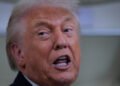
U.S. President Donald Trump on Wednesday issued a presidential proclamation suspending the entry of foreign students seeking to study or participate in academic exchange programmes at Harvard University. The order, which will last for an initial six months, may be extended and also directs the U.S. Secretary of State to consider revoking visas already granted to international students currently enrolled at the Ivy League institution.

Trump cited national security risks and accused Harvard of having “extensive entanglements” with foreign governments. He described the university’s conduct as detrimental to U.S. interests, stating that Harvard had failed to cooperate with federal authorities and was “flouting the civil rights of its students and faculty.” According to the proclamation, the university also submitted “deficient data” on only three students, despite being asked to disclose threats from foreign nationals.
In response, Harvard issued a sharp statement condemning the order as “yet another illegal retaliatory step” that infringes on its First Amendment rights. The university vowed to challenge the measure in court and pledged to continue supporting international students, nearly 7,000 of whom currently make up about 27% of its student body for the 2024–2025 academic year.
The move escalates a months-long legal and political standoff between the Trump administration and Harvard. Earlier in the year, a federal judge blocked the Department of Homeland Security from enforcing a similar ban targeting the university. That ruling temporarily protected foreign students, but Trump’s new proclamation revives the issue with broader implications.
The administration claims the policy stems from growing national security concerns tied to academic institutions, with officials accusing some foreign students—especially Chinese nationals—of espionage and ideological subversion. On the same day, the White House also threatened to revoke Columbia University’s accreditation over related allegations.
The decision comes amid heightened tensions across U.S. campuses over pro-Palestinian protests and concerns about antisemitism. Trump’s administration argues that elite academic institutions have failed to adequately report or contain foreign influence and domestic unrest, warranting federal intervention.
Legal experts expect swift challenges to the proclamation, which adds uncertainty to the future of international students at Harvard and may impact broader U.S. higher education policy.