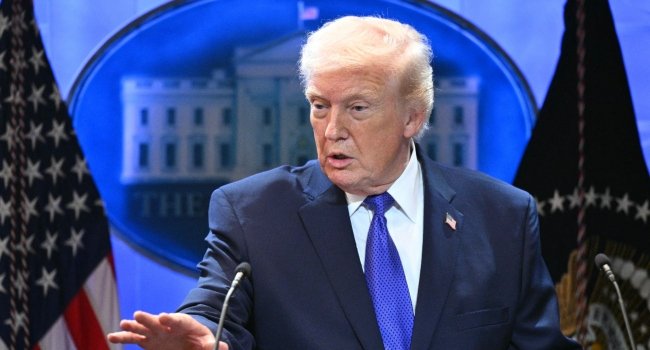
U.S. President Donald Trump has directed the U.S. Navy to begin a blockade of the strategic Strait of Hormuz following the collapse of high-stakes peace talks with Iran.
The announcement came after negotiations in Islamabad failed to produce an agreement, with both sides remaining divided over Iran’s nuclear programme and regional influence.

Trump said the blockade would take effect immediately, describing the U.S. Navy as the “Finest in the World” and vowing decisive action to counter Tehran’s activities in the region.
According to the U.S. administration, naval forces have been instructed to intercept vessels linked to Iran, particularly those that have paid transit tolls to the country, and to remove sea mines allegedly deployed in the waterway.
The Strait of Hormuz is one of the world’s most critical oil transit routes, with a significant portion of global energy supplies passing through it daily. The blockade is expected to further heighten tensions in the Middle East and disrupt international markets.
Talks between Washington and Tehran broke down after Iran declined key U.S. demands, including halting uranium enrichment and scaling back its regional activities.
Reacting to the development, Iran warned that any enforcement of the blockade could be treated as an act of war, raising fears of a broader military confrontation.
Despite the escalation, Trump expressed confidence that Iran may eventually return to negotiations, even as global leaders call for restraint to prevent further deterioration of the situation.
The move has already sent shockwaves through global markets, with oil prices surging amid concerns over supply disruptions and renewed instability in the region.