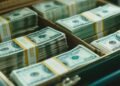
The National Hajj Commission of Nigeria (NAHCON) has intensified efforts to make the annual pilgrimage more affordable for Nigerian Muslims. The commission’s Chairman, Prof. Abdullahi Saleh Usman, has called on the Central Bank of Nigeria (CBN) to waive the two per cent charge imposed on pilgrims’ funds, emphasizing that its removal would significantly reduce Hajj fares.

Speaking in Abuja, Prof. Saleh reiterated that one of his primary goals since assuming office was to cut down Hajj costs, making it accessible to more Muslims across the country.
He expressed confidence that lowering fares would provide much-needed relief to pilgrims, religious leaders, and the entire Muslim community.
In pursuit of cost reductions, NAHCON has engaged key service providers, including airline operators, Masha’ir service providers, accommodation providers, and transportation companies.
Collaborating with the Forum of State Pilgrims Welfare Agencies, these negotiations have resulted in significant price cuts across multiple services.
For Masha’ir services, last year’s fee of 4,770 Saudi Riyals per pilgrim has been reduced by over 700 Riyals. Similarly, accommodation costs in Madinah, previously 5,000 Riyals per bed space, have been lowered by 200 Riyals per pilgrim.
Transportation costs, which stood at 1,300 Riyals per pilgrim last year, have also seen a 130 Riyal reduction per pilgrim.
Additionally, airfare—one of the major cost components of Hajj—has been successfully negotiated, with a reduction of $399 per pilgrim.
Given Nigeria’s geographical diversity, airfare prices vary across regions, but this reduction is expected to ease the financial burden on intending pilgrims.
Prof. Saleh affirmed that these reductions have already impacted overall Hajj costs and hinted at further adjustments in the coming weeks.
While clarifying that NAHCON is not requesting government subsidies, the Chairman appealed to the authorities to consider selling dollars to the commission at the official government exchange rate.
According to him, this measure would further lower Hajj fares, making the pilgrimage more affordable.
He explained that the commission had estimated the dollar exchange rate at ₦1,550, ₦1,600, and ₦1,650 but had settled on a moderate rate due to fluctuations. He assured pilgrims that if forex rates were reduced, any savings would be refunded to them.
In addition, he urged state governors to support their respective pilgrims’ welfare boards by providing loans.
These loans, he explained, would enable the boards to settle payments with NAHCON before the final payment deadline set by Saudi authorities.
Addressing concerns about payment deadlines, Prof. Saleh clarified that NAHCON has no control over the deadline but can appeal to the Saudi Ministry of Hajj for an extension if necessary.
He encouraged intending pilgrims to complete their payments on time to avoid last-minute issues that could jeopardize their chances of performing Hajj.
He also called on State Pilgrims Welfare Agencies and other stakeholders to intensify public awareness campaigns.
These campaigns, he noted, should educate intending pilgrims on the importance of timely payments and adequate preparation for a smooth and successful pilgrimage.
With ongoing negotiations and cost-cutting measures, NAHCON remains committed to ensuring that more Nigerian Muslims can fulfill their religious obligation without excessive financial strain.