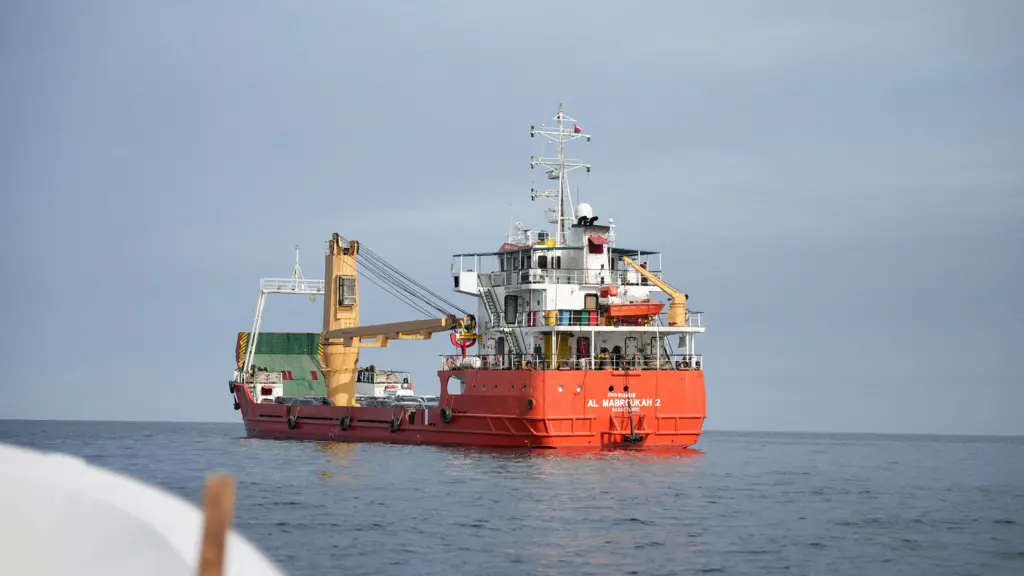
Iran has announced the renewed closure of the strategically vital Strait of Hormuz, citing the continued United States naval blockade of its ports, according to state media, in a move that heightens tensions in the Gulf region.

The development follows a series of rapid and often conflicting statements from both Tehran and Washington over the past 24 hours, reflecting the fragile state of the ceasefire arrangement.
At approximately 13:00 GMT on Friday, Iran’s Foreign Minister, Abbas Araghchi, declared on X that the Strait of Hormuz “is declared completely open for the remaining period of ceasefire”.
Minutes later, former US President Donald Trump responded on Truth Social, writing “THANK YOU!” but adding that the US naval blockade of Iranian ports would remain “UNTIL SUCH TIME AS OUR TRANSACTION WITH IRAN IS 100% COMPLETE”.
In a related diplomatic development, British Prime Minister Keir Starmer and French President Emmanuel Macron announced plans to lead an international mission to safeguard maritime navigation. The initiative, agreed during a virtual meeting involving 40 countries, is expected to commence “as soon as conditions allow”.
However, tensions escalated later in the evening when Iran’s parliamentary speaker, Mohammad Bagher Ghalibaf, dismissed Trump’s remarks, stating he “made seven claims in one hour, all seven of which were false”. He warned that with the “continuation of the [US] blockade”, the Strait “will not remain open”.
Despite these warnings, maritime tracking data from MarineTraffic indicated that some vessels continued transiting the waterway into Saturday morning.
By approximately 08:30 GMT, Iranian state media reported that the country’s military had reasserted control over the Strait, effectively closing it again. According to state broadcaster IRIB, Iran’s military said the US had failed to meet its obligations and insisted that “passage requires IRAN approval”.
Shortly after the announcement, vessel tracking data showed ships reversing course and returning to their ports of origin, underscoring the immediate impact of the renewed restrictions on one of the world’s most critical transit routes.