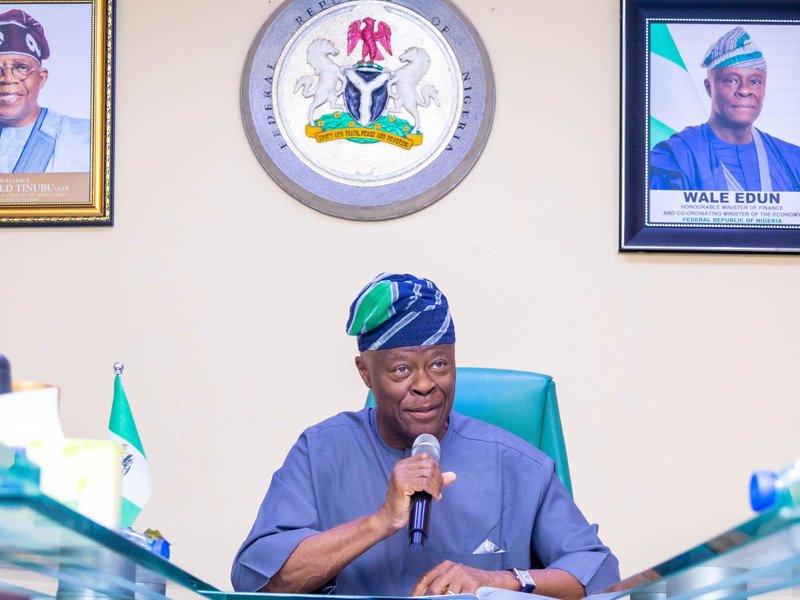
Nigeria’s Minister of Finance and Coordinating Minister of the Economy, Wale Edun, has said the Federal Government will not intervene to control petrol prices despite volatility in global oil markets triggered by the ongoing conflict in the Middle East.

Edun stated that the administration of Bola Tinubu remains committed to market-driven pricing of petroleum products and will avoid policies that distort the market.
Speaking during a television interview on Wednesday, the minister stressed that the government would rather deploy targeted measures to ease the cost of living for Nigerians than return to regulated fuel pricing.
“Rather than now reverting back and taking a backward step, we will look at every other measure that can help the cost of living of Nigerians without resorting to non-market pricing,” Edun said.
He added that the government’s economic reforms are anchored on market-based pricing for petroleum products and foreign exchange, describing them as key steps toward correcting long-standing distortions in the economy.
“It is the market price. That is what has been instilled by Mr President that was missing for so long, market pricing of petroleum products,” he said.
The minister acknowledged that the escalating conflict in the Middle East could push up global crude oil prices and affect domestic fuel costs, warning that the crisis may also increase transportation costs and inflation.
However, Edun said the government is exploring alternative measures to cushion the impact on Nigerians. Among these is the expansion of the Compressed Natural Gas (CNG) programme to reduce reliance on petrol.
“One of the ways the President immediately announced was 100,000 extra CNG conversion kits to enable vehicles to convert to CNG fuel, which is maybe 25 to 30 percent of the cost of petrol,” he explained.
Edun also noted that Nigeria’s growing domestic refining capacity has strengthened the country’s resilience to global energy shocks.
“Our demand is about 50 million litres per day, and the refiners say they can meet that demand, so we are in a relatively strong position,” he said.
He added that the government would only consider intervening in fuel pricing under extreme circumstances, maintaining that market pricing remains the administration’s preferred policy direction.
The Middle East crisis has triggered sharp swings in global oil markets, briefly pushing crude prices above $100 per barrel before easing, raising concerns about its potential impact on fuel prices and transportation costs in Nigeria.